Now over 6000 Reviews and (near) Daily Updates!

WELCOME! Use the search engines on this site (or your own off-site engine of choice) to gain easy access to the complete MAKSQUIBS Archive; over 6000 posts and counting. (New posts added every day or so.)

You can check on all our titles by typing the Title, Director, Actor or 'Keyword' you're looking for in the Search Engine of your choice (include the phrase MAKSQUIBS) or just use the BLOGSPOT.com Search Box at the top left corner of the page.

Feel free to place comments directly on any of the film posts and to test your film knowledge with the CONTESTS scattered here & there. (Hey! No Googling allowed. They're pretty easy.)

Send E-mails to MAKSQUIBS@yahoo.com . (Let us know if the TRANSLATE WIDGET works!) Or use the Profile Page or Comments link for contact.

Thanks for stopping by.

Friday, February 22, 2019

LURED (1947)

Hunt Stromberg, a major M-G-M producer in the ‘30s, brings that studio’s posh sensibility to this handsome, but underdeveloped murder pic; with director Douglas Sirk & lenser William Daniels working up dense London atmosphere (less fog than usual) on a serial killer tale that (for once) has nothing to do with Jack-the-Ripper. Instead, the focus is on Dance Hall gal Lucille Ball, very glam here, a pal of the latest victim, recruited by Scotland Yard Inspector Charles Coburn to act as bait by answering a series of personal ads to hopefully flush out the murderer . . . if she doesn’t get killed first. Yikes! With Boris Karloff as an early, slightly crazed suspect; George Sanders, a more likely culprit Ball falls hard for; and George Zucco as her police protector. Add Joseph Calleia, Alan Mowbray & Cedric Hardwicke as ‘Red Herrings’ (or are they the real guilty party?) for more than enough characters to investigate. But the film winds up delivering less than the sum of its procedural parts. Maybe it’s a structural problem, with a smuggling operation (a ‘wrong’ crime solved) pulling focus away from the main threat. It makes for a redundant third act, talky & anticlimactic.

ATTENTION MUST BE PAID: Ball, at 5'6", and Sanders, at 6'3", make a swell on screen couple.

DOUBLE-BILL: Ball probably had her best film noir outing the previous year in Henry Hathaway’s THE DARK CORNER/’46.

Thursday, February 21, 2019

HOLIDAY INN (1942)

It was songwriter Irving Berlin’s original idea: a Country Inn/Nightclub only open on holidays, developed by director Mark Sandrich & scripters Elmer Rice/Claude Binyon into a pair of sequential Romantic Triangles for Fred Astaire & Bing Crosby vying over Girl #1 (song & dance partner Virginia Dale) then Girl #2 (song & dance hopeful Marjorie Reynolds) before it's all worked out as Romantic Quadrangle by the finale. Lightweight dramatics for sure, but enough to hang a truly phenomenal line-up of Berlin holiday-themed numbers on, all immaculately performed, most freshly written for the pic, including three new American Songbook standards (WHITE CHRISTMAS; YOU’RE EASY TO DANCE WITH; BE CAREFUL IT’S MY HEART), the rest old hits or catchy novelty numbers. It goes down smoothly, if not without a hitch as Lincoln’s Birthday is celebrated in BlackFace. And not just any ol’ BlackFace, but a compendium of the form, with dark makeup on the band; Crosby a la Uncle Remus; girlfriend Reynolds in ultra-stylized traditional ‘Pickaninny’ BlackFace*; plus actual Black waiters & waitresses in antebellum period servant outfits while back in the kitchen, Louise Beaver & her two cute kids are mercifully left as is to join in a chorus of the specialty song, ‘ABRAHAM,’ charmingly, even if Beavers does refer to ‘Darkies.’ The number gets cut in t.v. showings, but if you only see one of these things, HOLIDAY hits all the insulting varieties of the form in just one sitting.

ATTENTION MUST BE PAID: Fred plays ‘drunk’ in one number. Yet even with impromptu partner Reynolds literally dancing circles around him, your eye is still drawn only to Astaire.

DOUBLE-BILL: Fred & Bing reunited on similar characters for BLUE SKIES/’46 in TechniColor; and nearly again for WHITE CHRISTMAS/’54 in VistaVision! Alas, Astaire was toying with retirement and a rewrite for Donald O’Connor had to be rewritten for Danny Kaye when O’Connor fell ill. Kaye’s last minute ‘save’ let him demand what may have been Hollywood’s most lucrative deal of the era, with gross participation on 1954's #1 pic. O’Connor finally (re)teamed with Bing on the lousy 1956 remake of ANYTHING GOES, Crosby’s Paramount adieu.

SCREWY THOUGHT OF THE DAY: *(A Rare Topical comment @ MAKSQUIBS!) With multiple BlackFace scandals in current political news, note that while HOLIDAY INN’s ‘Minstrel Numbo’ goes all BlackFace; twelve years on, WHITE CHRISTMAS’s even splashier Minstrel Show goes without. So, if it had become unacceptable between 1942 & 1954, why does it show up three (and more) decades later in elite college year books?

Wednesday, February 20, 2019

CLUNY BROWN (1946)

While not the masterpiece of his previous film, HEAVEN CAN WAIT/’43, Ernst Lubitsch’s final completed project does very nicely on its own terms as a slight delight. Set in Pre-WWII England, it tracks the up-and-down fortunes of exiled Czech Anti-Fascist Intellectual Charles Boyer, penniless in London, sponging off the kindness of society swells & titled strangers. Stumbling into a house party, he meets-cute with amateur plumber Jennifer Jones (subbing for her uncle in a drain emergency), as well as sympathetic scion Peter Lawford and Lady-of-the-Moment Helen Walker. An unlikely friendship continues in the comfort of Lawford’s country estate where Cluny has just been placed in service as Parlor Maid, complicating the rigid class conscious behavior Boyer respects, dissects & subtly ridicules. With everyone (even Jones!) relaxed & amused, and the merest wisp of a plot that sees Jones nearly fall into enervating local domesticity (with Una O’Connor’s putative mother-in-law clearing her throat in lieu of speech), the film tickles rather than wisecracks, using the unladylike task of plumbing as deus ex machina, before working up to a superbly economical Stateside coda that celebrates the Classless Land of the Free sans dialogue. Filmmaking has rarely looked so easy, so natural. Technique that takes a lifetime to build.

SCREWY THOUGHT OF THE DAY: Just one scene, with Boyer letting himself into Walker’s bedroom, ostensibly to pitch Lawford, but finding an attraction of his own, hints at layers of desire & assertion a younger/healthier Lubitsch might have developed more fully.

Monday, February 18, 2019

THE FAR HORIZONS (1955)

Though a natural for movie development, bio-pics on the Lewis & Clark Expedition aren’t exactly thick on the ground.* So this highly fictionalized account, ginned up with a romantic rivalry between Fred MacMurray’s Capt. Meriwether Lewis & Charlton Heston’s Lt. William Clark as they plough West across the continent for President Jefferson, is a painfully wasted opportunity. The ladies in question are society gal Barbara Hale (in stiff low-cut gowns) & Donna Reed’s Native American gal guide (darkening her FROM HERE TO ETERNITY Hawaiian tan), each turning in turn from bland MacMurray to dashing Heston. (And who could blame them?) Cinematographer-turned-director Rudolph Maté settles for efficiency rather than sweep, rarely letting us know where we are in the journey. (Ironic that a film about map-makers could have used a few on-screen maps to keep us dramatically informed.) Some outdoor location shots make a mark, helped by the double-sized negative of the famed VistaVision process; and film buffs will get a kick seeing MacMurray, Paramount’s he-man from the mid-‘30s to the mid-‘40s, fuming at Heston, Paramount’s 1950s he-man. But it’s hardly worth the bother.

WATCH THIS, NOT THAT: Instead, try King Vidor’s problematic, but fully engaged NORTHWEST PASSAGE/’40 with Spencer Tracy & Robert Young.

SCREWY THOUGHT OF THE DAY: *Old Hollywood maxim holds that period pics with men in wigs (think Revolutionary War) die at the box-office.  Perhaps this explains no one taking on another Lewis & Clark bio even though most of the story happens in wig-free wilderness.

Sunday, February 17, 2019

TOM THUMB (1958)

After creating dozens of Animated Stop-Motion ‘Puppetoon’ shorts, George Pal moved up to Sci-Fi oriented features as Producer before hyphenating into Producer-Director on this Kiddie Musical Fantasy. No great shakes as story, little Tom Thumb seems to have spent a few matinees watching Walt Disney’s PINOCCHIO before joining childless couple Bernard Miles & Jessie Matthews as their very own little boy, getting involved with a pair of thieving scoundrels (Peter Sellers & Terry-Thomas), fulfilling a wish thanks to a materializing fairy, saving the day with his bravery . . . you get the idea. The playing is English Pantomime broad and a handful of mediocre songs go on ad infinitum. But worth a look for a fine-spun picture-book look from cinematographer Georges Périnal; the varied special-effects tricks (holding up pretty well or fanciful enough so you don’t mind spotting the seams); Russ Tamblyn’s athletic gusto as Tom (though he does put out a weird sexy vibe); and of course the liberal use of Pal’s signature ‘Puppetoons’ whether on their own or cleverly interacting with other elements inside the same frame. Fun, though today’s kids may well have moved on at an awfully young age.

DOUBLE-BILL: Pal’s next, THE TIME MACHINE/’60, is his best remembered; his last, 7 FACES OF DR. LAO/’64, his best. (Or is if you don’t mind Tony Randall in YellowFace as ancient, mythical Asian.) OR: For more late-‘50s analogue camera tricks in scaling a cast down to size, try DARBY O’GILL AND THE LITTLE PEOPLE/’59.

ATTENTION MUST BE PAID: One of two tunes written for the film by Peggy Lee, ‘Are You A Dream,’ is lip-synched by Alan Young. But who did the fine dubbing?

Friday, February 15, 2019

PASSAGE TO MARSEILLE (1944)

Infamous for its Flashback within a Flashback within a Flashback story construction, this outstanding WWII actioner still keeps its story clear as a bell thanks to Casey Robinson’s step-by-step plotting (no matter the route) and with director Michael Curtiz as unfazeable tour guide. (Take that INCEPTION!) A paean to the indomitable French Spirit (at least as seen in film), it ratchets up a resistance angle on a small group of strong-willed Devil’s Island escapees who risk it all in hope of returning home to fight the Nazis. There’s a PAPILLON meets DIRTY DOZEN aspect to the fanciful storyline, with most of the men (Peter Lorre, Philip Dorn, George Tobias, Helmut Dantine) legitimate convicted criminals of various levels of depravity, and only Humphrey Bogart’s crusading anti-Fascist newsman there on purely false charges. The physical production, loaded with clever effects (led by Jack Cosgrove), is still impressive (lots of miniatures where you don’t expect them), with cinematographer James Wong Howe on a tear, and even the language mix (mostly accented English, but with French tossed in for flavor) smart & unusual. A romantic angle between Bogie & Michèle Morgan gets short-shrift, but doesn’t harm things in this underrated Vive La France wowser. (NOTE: Be sure to check out the great jazz short JAMMIN’ THE BLUES, phenomenally lit by Robert Burks,, included on the DVD.)

DOUBLE-BILL: Lots of holdover talent from CASABLANCA/’42 in here, but this film is less followup to that classic romance than to ACTION IN THE NORTH ATLANTIC/’43 which came in-between. (see below)

Wednesday, February 13, 2019

BLOSSOMS IN THE DUST (1941)

Anita Loos, who gave us Lorelei Lee in GENTLEMEN PREFER BLONDES and Jean Harlow’s raciest lines, must have hung her head in shame over this treacly bio-pic. Worse, she knew the damn thing worked. It’s all about noble Edna Gladney (Greer Garson), a personal tragedy magnet, she loses a foster sister, a child, a business fortune, fertility and a husband as she moves from Wisconsin to Texas, opening a newfangled Day Care Center for Tots of Working Mothers which morphs into a child-placing orphanage/adoption service and then a civic campaign to remove the stigma (even the term) of illegitimacy from official state records. Overburdened in M-G-M house style, over-dressed sets, pudding rich TechniColor (for Garson’s flaming tresses), Mervyn LeRoy’s stultifying corporate direction, it adds Walter Pidgeon, in his first turn as Garson’s consort, an unlikely Texas entrepreneur, while Ernst Lubitsch regular Felix Bressart adds a little bounce as a doctor from the wrong side of the tracks. The portrayals of black servants are simultaneous less insulting and more condescending than usual, with pretty maid Theresa Harris made up far darker than she appears in other pics. (Max Factor ‘Blackamoor?’*) Garson finally shows a bit of selfish self-pity at the end, but rights course for an uplifting curtain. Dramatic cotton-candy spun from lead.

DOUBLE-BILL: Against expectations, Garson & Pidgeon (in the third of eight pairings), again with LeRoy directing, hit similar emotional buttons without making you hate yourself in the morning on MADAME CURIE/’43, a follow-up bio-pic helped by a fine Paul Osborn script.

ATTENTION MUST BE PAID: *Darkening up black actors wasn’t unusual at the time (and the TechniColor process necessitated odd tints), but rarely so extreme. Directly below, two shades of Theresa Harris.


Monday, February 11, 2019

SNEAKERS (1992)

Antiseptic, but fun genre-crossing pic (CAPER FILM meets MISSION IMPOSSIBLE*) from remarkably unproductive writer/director Phil Alden Robinson. With Robert Redford and a motley crew of hip security hackers (Sidney Poitier, Dan Aykroyd, River Phoenix, David Strathairn) working break-ins on big company systems to expose hidden weaknesses. But Redford’s got a weakness of his own, a hidden past as a student radical who fled to Canada, a secret which is now being used by undercover government agents to blackmail Redford (& Co.) into stealing a powerful Universal Encryption Decoder. Lots of cool ‘90s state-of-the-art computer tech (the mix of digital & analogue equipment giving off a nice retro buzz), with Ben Kingsley as Redford’s college pal turned Master-of-the-Universe villain (dig that East Coast accent) and Mary McDonnell wedged in as Redford’s helpful ‘ex.’  If only the script didn’t overdose on ‘the cutes’ (every character metaphorically winking at us) or push quite so many politically correct buttons for cheap easy rapport.

DOUBLE-BILL: Steven Soderbergh must have taken a good look here before his OCEANS 11 remake.

ATTENTION MUST BE PAID: * . . . by me!  MI already IS an espionage/caper genre crossover.  Sorry.

Sunday, February 10, 2019

THE OLD MAID (1939)

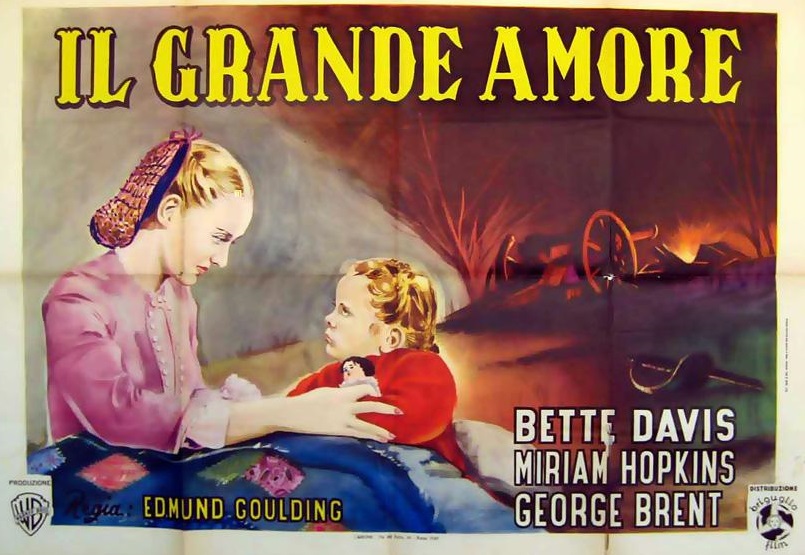
Maybe it was the prestige factor (Edith Wharton novel/Pulitzer Prize play), whatever the cause, everyone presses too hard at first in this Civil War Era story of cousins Bette Davis & Miriam Hopkins, rivals in love, then rivals for a child’s affection. Hopkins the worst offender, in needless competition with Davis, but it affects the whole cast and doesn’t right itself until post-war years, leading up to a ridiculously satisfying, one for the ages conclusion. It opens on Hopkins’ wedding day, as old beau George Brent (duller than ever) shows up out of the blue after two years to try and (re)claim his bride, only to run off with Davis as conciliation prize. Naturally, ‘you know what' happens, leaving an unwed Davis with little ‘Clementina,’ a child who grows up thinking she’s a foundling; Davis her prissy, repressed ‘Aunt’; and Hopkins an indulgent surrogate mom to love. Like interest at a bank, Wharton uses compound lies, compound misunderstandings, compound missed opportunity & compound coincidence to reward us with compound emotional dividends. Enough to provoke compound giggles here & there. But Davis finds her character’s secret in renunciation, never letting on she’s playing a long game for her daughter’s ultimate happiness & success. It’s as close as Davis ever got to playing STELLA DALLAS. Director Edmund Goulding was more comfortable with Davis in the contemporary settings of the just released DARK VICTORY/’39, but earns kudos for covering so much plot in 95 minutes without seeming to rush.

DOUBLE-BILL: Davis & Hopkins had even more fun loathing each other in OLD ACQUAINTANCE/’43.